
You’re in your cubicle and trying to speak on the phone with a potential client, but the guy in the cubicle next to you is having a conversation as well. Because of this you are having issues concentrating on the conversation with the person on the other side of the phone and trying to make it as personal and private as possible isn’t working. What are you to do? Many employees face this dilemma every day, you can hear conversations down the hall and even with the boss’s office door shut, his words are still ringing clear. There is an answer to minimize the noise and distraction within the office, helping create a more confidential working environment, and that is sound masking.
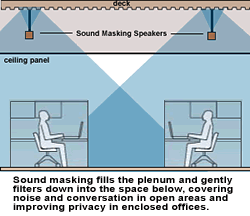 Sound masking uses white noise to achieve speech privacy. White noise, most commonly known as static noise, is in fact just a low-level background noise in a variety of options with the purpose to create and achieve speech privacy. The How Sound Masking Worksidea behind sound masking is that you can be seen and slightly heard but not understood, allowing for more private conversations and dealings. There are two primary reasons and importance for the technology, the first being that sound masking helps reduce distraction. Workers are distracted more than 2 hours every day and the loss of productivity can highly impact a company and the worker itself. Integrating a sound masking system helps recover lost time by minimizing unnecessary noise disturbances, like the conversational type that are common in cubicle offices. The second primary function of sound masking is again the privacy it provides. The white noise can help eliminate eavesdropping or overhearing the conversation of your coworker, and reduce the ability to hear your boss’s confidential phone call word for word.
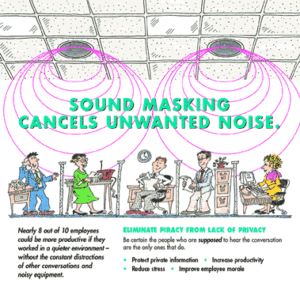 Many companies and facilities have already discovered the advantages of sound masking, whether it was creating a more focused environment or enhancing speech privacy. Offices using partitions benefit because employeeshome are less disrupted from the sound coming from their neighboring cubicle, and medical facilities are implementing these systems to assist in keeping the privacy of conversations between patients and associates. With some buildings going with the new trend of wall-less offices and space, sound masking is even more important with the higher number of distractions. Sound masking is quickly becoming a tool for success for businesses of all kinds. Guide your employees to amazing accomplishments by providing the right environment to channel their energy and increase their productivity. Inquire at Fearing’s today to learn more about sound masking systems and all the ways it can be customized based off of your needs.